

The narrow zone of soil influenced by plant roots is called the rhizosphere. It is one of the most active areas in an agricultural field. Roots release compounds into this zone, microorganisms interact with those compounds, and nutrients continuously change between available and unavailable forms.
A productive rhizosphere supports more than root length. It influences nutrient access, soil aggregation, biological competition, water relations and the crop’s ability to establish under variable conditions.
Mycorrhiza and the Functional Root Area
Endomycorrhizal fungi form a beneficial association with plant roots. Their fine hyphal network extends beyond the root surface and explores soil pores that roots alone may not reach efficiently. This expanded functional area can support access to phosphorus and micronutrients, particularly where nutrient movement in soil is limited.
Successful colonization depends on living roots and suitable field conditions. Excessive phosphorus, unsuitable pesticide combinations, waterlogging or poor root health may reduce establishment. Mycorrhizal products should therefore be placed close to active roots and integrated into the crop programme from the beginning.
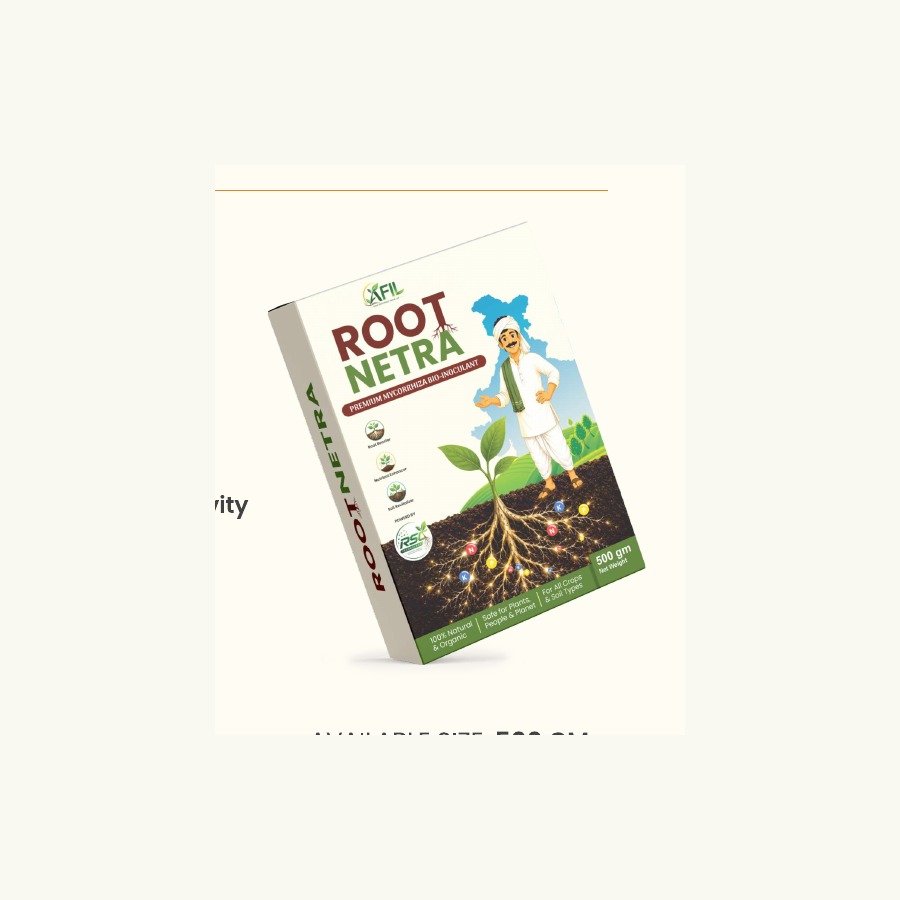
ROOTNETRA uses RSC™ Technology and contains a dual-strain endomycorrhiza consortium of Glomus intraradices and Glomus mosseae. It is designed to support root colonization, functional root surface area, phosphorus and micronutrient uptake, root metabolism and Nutrient Use Efficiency.
Trichoderma and Biological Root-Zone Support
Trichoderma species are widely studied for their ability to colonize the root zone and interact with other soil microorganisms. Depending on strain and conditions, their modes of action may include mycoparasitism, antibiosis, competition for space and nutrients, and stimulation of plant defence responses.
TRI-NETRA (PSBF) is positioned as a multi-mode biological solution supporting mycoparasitism, antibiosis, competition, healthy root development and Induced Systemic Resistance (ISR). Its performance should be supported by correct handling, placement and compatibility.
Good Practices for Biological Products
- Store and handle products according to label directions.
- Avoid exposing living biologicals to excessive heat or direct sunlight.
- Check compatibility with fungicides, disinfectants and high-salt fertilizers.
- Apply near active roots with suitable soil moisture.
- Use clean equipment and appropriate water quality.
- Evaluate establishment and crop response over time rather than expecting an instant visual effect.
Biological products perform as part of an ecosystem. Their value improves when combined with organic matter management, balanced nutrition, suitable irrigation and practices that protect root-zone life. Building a healthy rhizosphere is a long-term investment in nutrient access and crop resilience.
Explore Related Afil Solutions
Contact the Afil team for product selection and application guidance.
This article provides general educational information. Product selection, dosage and application should follow the approved label and guidance from a qualified agricultural professional.